Hello ladies and gents this is the Viking telling you that today we are talking about
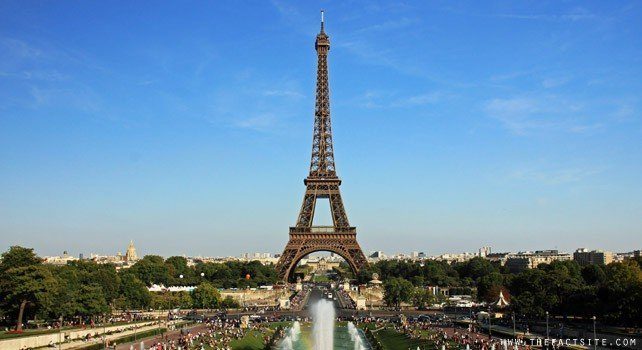
FACTS ABOUT FRANCE
1. France is the world’s most popular tourist destination
Some 83.7 million visitors arrived in France, according to the World Tourism Organization report published in 2014, making it the world’s most-visited country.
2. France is the largest country in the EU, and known as ‘the hexagon’
With an area of 551,000 sq km it’s almost a fifth of the EU’s total area, and due to its six-sided shape France is sometimes referred to as l’hexagone. About a quarter is covered by forest; only Sweden and Finland have more.
3. Louis XIX was the king of France for just 20 minutes, the shortest ever reign
He ascended to the French throne in July 1830 after his father Charles X abdicated, and abdicated himself 20 minutes later in favour of his nephew, the Duke of Bordeaux. He shares this record with Crown Prince Luís Filipe, who technically became king of Portugal after his father was assassinated but died from a wound 20 minutes later.
4. Liberté, égalitié, fraternité meaning ‘liberty, equality and fraternity’ (or brotherhood) is the national motto of France
It first appeared around the time of the Revolution (1789–1799), and was written into the constitutions of 1946 and 1958. Today you’ll see it on coins, postage stamps and government logos often alongside ‘Marianne’ who symbolises the ‘triumph of the Republic’. The legal system in France is still largely based on the principles set down in Napoleon Bonaparte’s Code Civil after the revolution, in the 1800s.
5. The French Army was the first to use camouflage in 1915 (World War I)
The word camouflage came from the French verb ‘to make up for the stage’. Guns and vehicles were painted by artists called camofleurs.
6. In France you can marry a dead person
Under French law, in exceptional cases you can marry posthumously, as long as you can also prove that the deceased had the intention of marrying while alive and you receive permission from the French president. The most recent approved case was in 2017, when the partner of a gay policeman gunned down on Paris’s Champs-Elysees by a jihadist was granted permission to marry his partner posthumously.
7. The French have produced a number of world-renown inventions
The ‘father of canning’ confectioner Nicolas Appert came up with the idea to use sealed glass jars placed in boiling water to preserve food in 1809, and the later use of tin cans was the idea of another Frenchman, Pierre Durand; the reading and writing system for the blind, braille, was developed by Louis Braille who was blinded as a child; physician René Laennec invented the stethoscope at a hospital in Paris in 1816, first discovered by rolling up paper into a tube; and Alexandre-Ferdinand Godefroy patented a contraption was the world’s first hair dryer in 1888. The Montgolfier brothers Joseph and Etienne became pioneers of hot air flight after the world’s first public display of an untethered hot air balloon in 1783. A less known fact is that the popular game Etch-a-Sketch was invented in the 1950s after French electrical technician André Cassagnes peeled a translucent transfer from a light switch plate and discovered his pencil marks remained on its underside, a result of the electrostatically charged metallic powder.
8. France was the first country in the world to ban supermarkets from throwing away or destroying unsold food
Since February 2016, shops must donate wastage to food banks or charities.
9. About one million French people living near the border with Italy speak Italian
Although French is the official language and the first language of 88 percent of the population, there are various indigenous regional dialects and languages, such as Alsacian, Basque, Breton, Catalan, Occitan and Flemish. On a larger scale, French is the second most spoken mother tongue in Europe, after German and before English, and is predicted to become number one by 2025 due to the country’s high birth rate.
10. The Académie Française has aimed to preserve the French language since 1634
by attempting to ban, somewhat unsuccessfully, foreign words such as blog, hashtag, parking, email and weekend. It was started by a small group of French intellects and officially recognised by Louis XIII in 1635.
Comments
Post a Comment