Hello ladies and gents this is the Viking telling you that today we are talking about
Rafael Leónidas Trujillo Molina
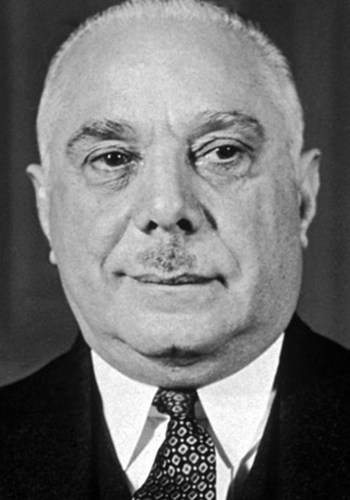
Rafael Leónidas Trujillo Molina ; 24 October 1891 – 30 May 1961, nicknamed El Jefe , was a Dominican politician and soldier who ruled the Dominican Republic from February 1930 until his assassination in May 1961. He served as president from 1930 to 1938 and again from 1942 to 1952, ruling for the rest of the time as an unelected military strongman under figurehead presidents. His 31 years in power, to Dominicans known as the Trujillo Era (Spanish: El Trujillato), are considered one of the bloodiest eras ever in the Americas, as well as a time of a personality cult, when monuments to Trujillo were in abundance. Trujillo and his regime were responsible for many deaths, including between 20,000 and 30,000 Haitians in the infamous Parsley massacre.
During his long rule, the Trujillo government extended its policy of state terrorism beyond national borders. Notorious examples of Trujillo's reach abroad are the unsuccessful assassination attempt in Caracas against Venezuelan President Rómulo Betancourt (1960), the abduction and subsequent disappearance in New York City of the Spaniard Jesús Galíndez (1956), the murder of writer José Almoina in Mexico, also a Spaniard, and crimes committed against Cubans, Costa Ricans, Nicaraguans, and Puerto Ricans, as well as United States citizens.
The Trujillo era unfolded in a Hispanic Caribbean environment that was particularly fertile for dictatorial regimes. In the countries of the Caribbean Basin alone, his dictatorship was concurrent, in whole or in part, with those in Cuba, Nicaragua, Guatemala, El Salvador, Honduras, Venezuela, and Haiti. In retrospect, the Trujillo dictatorship has been characterized as more prominent and more brutal than those that rose and fell around it. Trujillo remains a polarizing figure in the Dominican Republic; as is the case with Spain's Francisco Franco, the sheer longevity of his rule makes a detached evaluation difficult. While his supporters credit him for bringing stability and prosperity to the country, others criticize his heavy-handed rule and disregard for civil rights and freedoms.
On Tuesday, 30 May 1961, Trujillo was shot and killed when his blue 1957 Chevrolet Bel Air was ambushed on a road outside the Dominican capital.[54] He was the victim of an ambush plotted by a number of men, among them General Juan Tomás Díaz, Pedro Livio Cedeño, Antonio de la Maza, Amado García Guerrero and General Antonio Imbert Barrera. The plotters, however, failed to take control as the later-to-be-executed General José René Román Fernandez ("Pupo Román") betrayed his co-conspirators by his inactivity, and contingency plans had not been made. On the other side, Johnny Abbes, Roberto Figueroa Carrión, and the Trujillo family put the SIM to work to hunt the members of the plot and brought back Ramfis Trujillo from Paris to step into his father's shoes. The response by SIM was swift and brutal. Hundreds of suspects were detained, many tortured. On 18 November the last executions took place when six of the conspirators were executed in the "Hacienda María Massacre". Imbert was the only one of the seven assassins who survived the manhunt. A co-conspirator named Luis Amiama Tio also survived.
President John F. Kennedy learned of Trujillo's death during a diplomatic meeting with French President Charles de Gaulle.
Trujillo's funeral was that of a statesman with the long procession ending in his hometown of San Cristóbal, where his body was first buried. President Joaquín Balaguer gave the eulogy. The efforts of the Trujillo family to keep control of the country ultimately failed. The military uprising on 19 November of the Rebellion of the Pilots and the threat of American intervention set the final stage and ended the Trujillo regime. Ramfis tried to flee with his father's body upon his boat Angelita, but was turned back. Balaguer allowed Ramfis to leave the country and to relocate his father's body to Paris. There the remains were interred in the Cimetière du Père Lachaise on 14 August 1964, and six years later moved to Spain, to the Mingorrubio Cemetery in El Pardo on the north side of Madrid
I hope you liked this post and as always have a chilled day from the Viking
Comments
Post a Comment